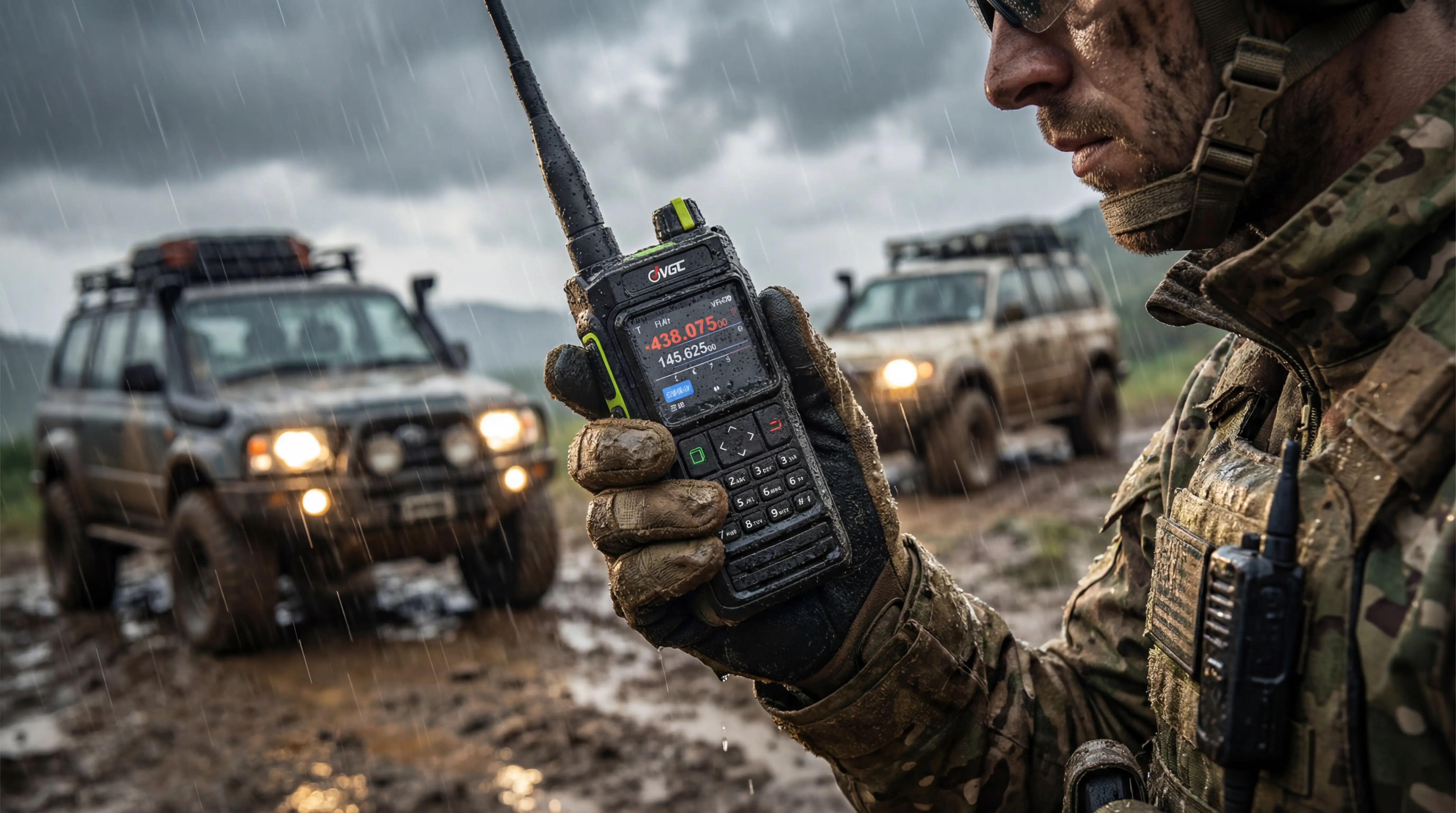
Professional Two-Way Radio vs. Consumer Walkie-Talkie:
The Real Technical Differences
Understanding the gap between "point-to-point talk" and Mission-Critical RF Infrastructure.
The Definition Problem
While many use the terms interchangeably, the technical engineering behind them is vastly different. A consumer walkie-talkie is a standalone wireless terminal designed for leisure, whereas a professional two-way radio is a high-performance node designed to operate within a complex Wireless Fleet Management system.
Engineering & Performance Matrix
Key Differentiation for B2B Operations
Infrastructure vs. Standalone
Consumer walkie-talkies rely solely on their internal antenna. Professional Two-Way Radio Systems integrate with repeaters and RoIP gateways, ensuring coverage across thousands of square miles for logistics and SAR.
Digital Telemetry & Tracking
In professional security, voice is only half the mission. Enterprise systems provide Real-time GPS Tracking. A standard walkie-talkie cannot report its position—a professional VGC terminal does so automatically via BSS Signaling.
Professional Fleet Implementation
Handheld Terminal Node
The VR-N76 offers professional IP67 durability and built-in BSS GPS tracking that consumer handhelds lack.
View Specs →Mobile Command Hub
The VR-N7600 delivers a sustained 50W output, 100% duty cycle, and Android Head-unit synchronization.
View Specs →The ROI of Professional RF
Why buy 10 consumer radios when one MIL-STD professional unit outlasts them all? Organizations reduce their Total Cost of Ownership (TCO) by investing in hardware that survives the storm.